What Is Paint Protection Film? Benefits, Pros and Cons Guide

Keeping a car looking brand new always is not easy. Daily driving exposes the vehicle paint to dust, road debris, sunlight, bird droppings, and minor scratches. Over time these small problems can slowly reduce the shine and value of your vehicle. This is where Paint Protection Film, commonly known as PPF, becomes useful.
Many car and bike owners today choose PPF to protect their vehicle’s exterior from common damage. But before investing in it, it is important to understand what it is, how it works, and whether it is really worth the cost. This guide explains everything in simple terms so new car owners can make the right decision.
What Is Paint Protection Film?
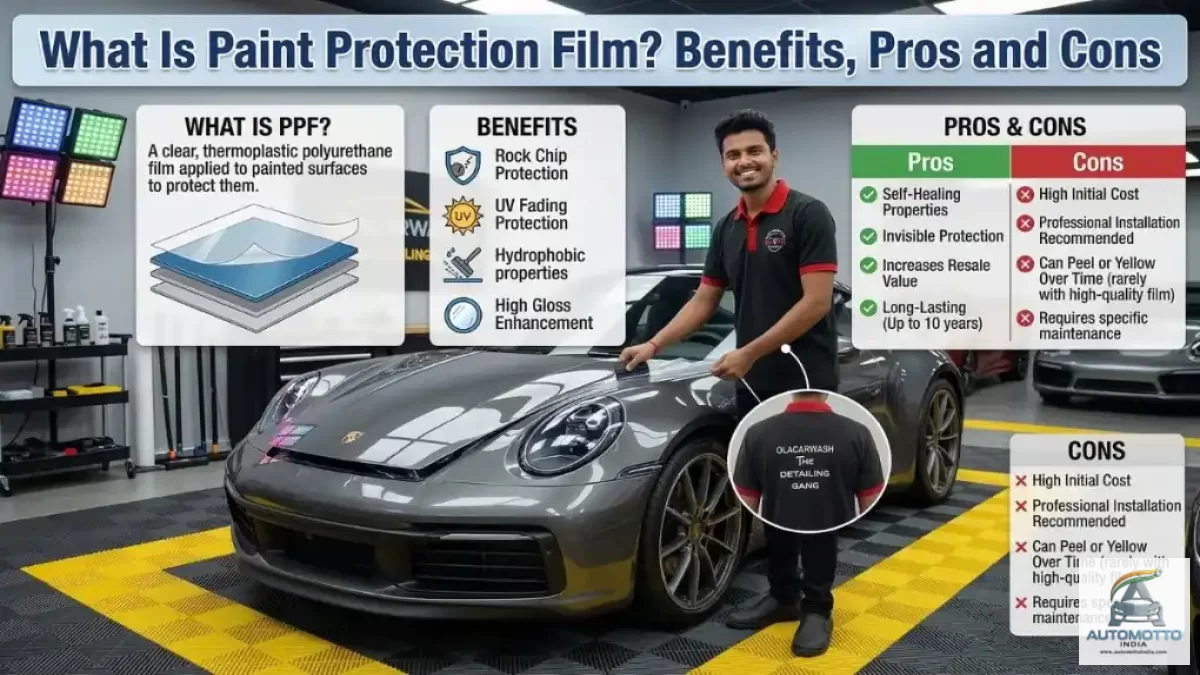
Paint Protection Film is a transparent urethane film applied on the painted surfaces of a car or bike. It forms a thin protective layer over the factory paint. The main goal is to protect the vehicle from scratches, stone chips, stains, and environmental damage. The film was originally developed for military use to protect helicopter blades from debris. Later the automotive industry adopted it to protect vehicle paint.
Today high-quality PPF is made using thermoplastic polyurethane (TPU PPF). This material is flexible, strong, and capable of absorbing small impacts. Because it is transparent, it does not change the original color of the vehicle.
Some PPF options are available in different finishes, such as gloss, matte, and colored films. This allows owners to either preserve the original paint or slightly change the visual appearance.
How Does Paint Protection Film Protect Car or Bike Paint?
To understand the value of PPF, it helps to know how the film actually protects the paint. When installed, the film acts as a barrier between the vehicle paint and outside elements. Road debris, sand, small stones, and dirt first hit the film instead of the paint. The structure of the film absorbs and disperses impact energy. This prevents the impact from reaching the paint layer underneath.
High-quality PPF also includes several advanced features.
- Self-healing properties: Many modern films can repair small scratches when exposed to heat from sunlight or warm water. Minor swirl marks slowly disappear as the film returns to its original shape.
- UV protection: Continuous sun exposure can fade car paint over time. PPF blocks harmful UV rays and reduces paint oxidation.
- Chemical resistance: Bird droppings, tree sap, and road tar can damage paint if left untreated. PPF resists these chemicals and prevents stains.
- Hydrophobic surface: Some advanced films include a ceramic-infused top layer. This helps water slide off easily and reduces dirt buildup.
Because of these features, the paint underneath remains protected and looks newer for longer.
Types of Paint Protection Film
Several types of PPF are available in the market today. The main differences depend on finish, structure, and durability.
- Gloss PPF: Gloss films enhance the shine of the paint and give the car a polished appearance.
- Matte PPF: Designed for matte-finish cars, this film protects the paint while maintaining the matte look.
- Clear PPF: This is the most common option. It is almost invisible and protects the paint without changing the look of the vehicle.
- Colored PPF: Colored films combine protection with a visual change, allowing owners to add a new shade while protecting the original paint.
Some films are also categorized as single coat or double coat. Double-coat films are usually more durable and better suited for hot climates. Top PPF brands in Delhi, India are 3M PPF, Garware, XPEL, Rodim, Llumar and more
PPF Installation Process
Professional installation is recommended for best results. The process involves several steps.
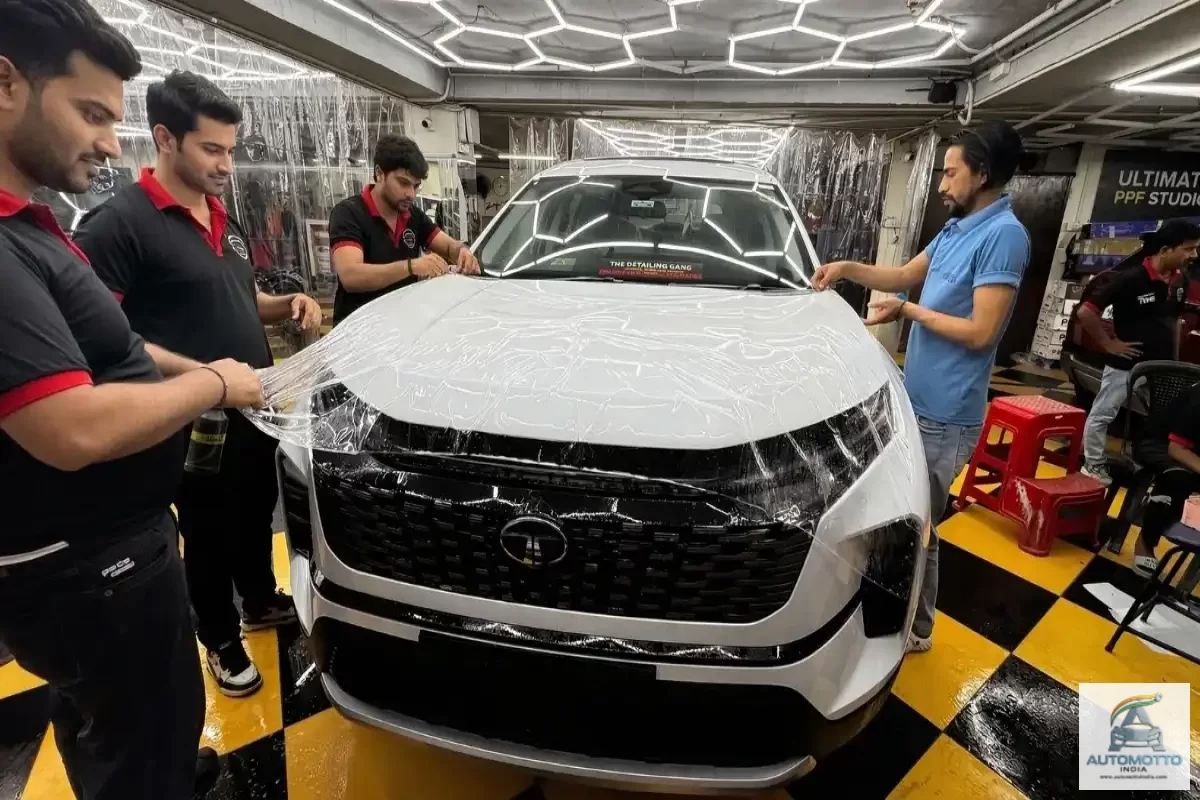
- Surface preparation: The vehicle is thoroughly cleaned and polished to remove dust, grease, and contaminants
- Measurement and cutting: The film is precisely cut to match the shape of each panel.
- Application: The installer places the film on the surface using a special liquid solution.
- Squeegee process: A tool is used to remove air bubbles and ensure proper adhesion.
- Edge finishing: Edges are carefully trimmed and sealed for a clean finish.
- Curing period: The film needs time to settle and bond with the paint surface.
A full installation may take several hours depending on the vehicle size and coverage area.
Read More :
Pros of Paint Protection Film
Paint Protection Film offers several advantages for car and bike owners.
- Long lifespan: High quality films can last between seven and ten years with proper care.
- Self-healing capability: Minor scratches and swirl marks disappear when heat activates the film.
- Low maintenance: Regular washing with mild car shampoo is usually enough to maintain the film.
- UV and stain protection: The film prevents fading, oxidation, and stains caused by environmental contaminants.
- Improves resale value: A well-protected car often sells at a higher price because the paint remains in better condition.
- Maintains original paint quality: The factory paint remains untouched under the film, which helps keep the car looking new.
- Strong protection from scratches: The film absorbs small impacts from stones and debris that could otherwise damage the paint.
Cons of Paint Protection Film
While PPF offers many benefits, it also has a few limitations.
- High initial cost: Professional installation can be expensive depending on the vehicle and coverage area.
- Requires expert installation: Improper installation can lead to bubbles, stretch marks, or visible edges.
- Quality differences in the market: Cheap films may discolor, peel, or leave adhesive marks after removal.
- Limited protection in major accidents: PPF protects against minor damage but cannot prevent damage from large collisions.
Because of these factors, it is important to choose a reputable installer and a reliable film brand.
Is Paint Protection Film Worth It?
For many vehicle owners, the answer is yes!. f you recently purchased a new car or a premium bike, protecting the paint early helps maintain its appearance for years. Repairing damaged paint can be costly, and repainting rarely matches the original factory finish. PPF works as a preventive solution. Instead of repairing damage later, it reduces the chances of damage in the first place.
It is especially useful for people who drive daily, travel on highways, or want to preserve their vehicle for long-term ownership. Owners of luxury vehicles, sports cars, and new cars often choose PPF because maintaining perfect paint condition is important for both aesthetics and resale value.
However, the value depends on your priorities. If protecting the exterior and maintaining long-term value matter to you, PPF can be a smart investment.
Final Thoughts
Paint Protection Film has become one of the most effective ways to protect a vehicle’s exterior. By forming a strong yet flexible layer over the paint, it shields the surface from scratches, debris, stains, and sun damage. For new car and bike owners, it offers peace of mind that the vehicle will continue to look clean and well maintained even after years of use.
Like any automotive upgrade, it has both advantages and limitations. The key is choosing a high-quality film and getting it installed by experienced professionals. When installed correctly, paint protection film can help preserve the beauty of your vehicle and protect one of its most important assets, the paint.
Frequently Asked Question
Q1. Is paint protection film a good idea?
Ans. Surely Yes!, paint protection film is a good idea for car owners who want to protect their vehicle’s original paint. Paint Protection Film (PPF) creates a transparent protective layer over the paint that helps prevent scratches, stone chips, UV damage, and stains from bird droppings or tree sap. It is especially useful for new cars because it keeps the factory paint in better condition for many years.
Q2. What are the disadvantages of paint protection film?
Ans. The main disadvantages of paint protection film are its installation cost and the need for professional application. Low-quality films can also turn yellow or peel over time. PPF protects against minor scratches and road debris, but it cannot prevent damage from major accidents or deep dents.
Q3. How long does a paint protection film last?
Ans. A high-quality paint protection film typically lasts between 7 to 10 years with proper care. The lifespan depends on the film quality, installation method, weather exposure, and how well the vehicle is maintained. Premium films installed by professionals usually last longer and maintain clarity for many years.
Q4. How much will PPF cost?
Ans. The cost of paint protection film depends on the vehicle size, film brand, and coverage area. In India, full car PPF installation can range between ₹45,000 and ₹2,00,000+ or more for premium films.
Q5. Can PPF be removed?
Ans. Yes, Paint Protection Film can be safely removed without damaging the original paint when done correctly. Professional installers use heat and proper techniques to peel the film off the surface. However, once removed, the same film cannot be reused.
Q6. Is paint protection film costly?
Ans. Compared to traditional wax or sealants, paint protection film is more expensive initially. However, it can be considered cost-effective because it protects the paint for many years and reduces the need for repainting or frequent paint correction.
Q7. Does PPF affect car resale value?
Ans. Yes, Paint Protection Film can positively affect resale value. Because the original paint remains protected from scratches and fading, the vehicle usually looks newer. Buyers often prefer cars with well-preserved paint, which can help maintain a higher resale price.
Q8. What happens to PPF after maturity?
Ans. After its lifespan ends, Paint Protection Film may start showing signs such as slight discoloration, reduced clarity, or edge lifting. At that stage, the film should be professionally removed and replaced with a new layer if continued protection is required.
Q9. What is better than paint protection film?
Ans. There is no direct replacement that offers the same level of physical protection as Paint Protection Film. Alternatives like ceramic coating improve gloss and make cleaning easier, but they do not protect against rock chips or scratches the way PPF does. Many car owners combine ceramic coating with PPF for better overall protection.

Discussion